
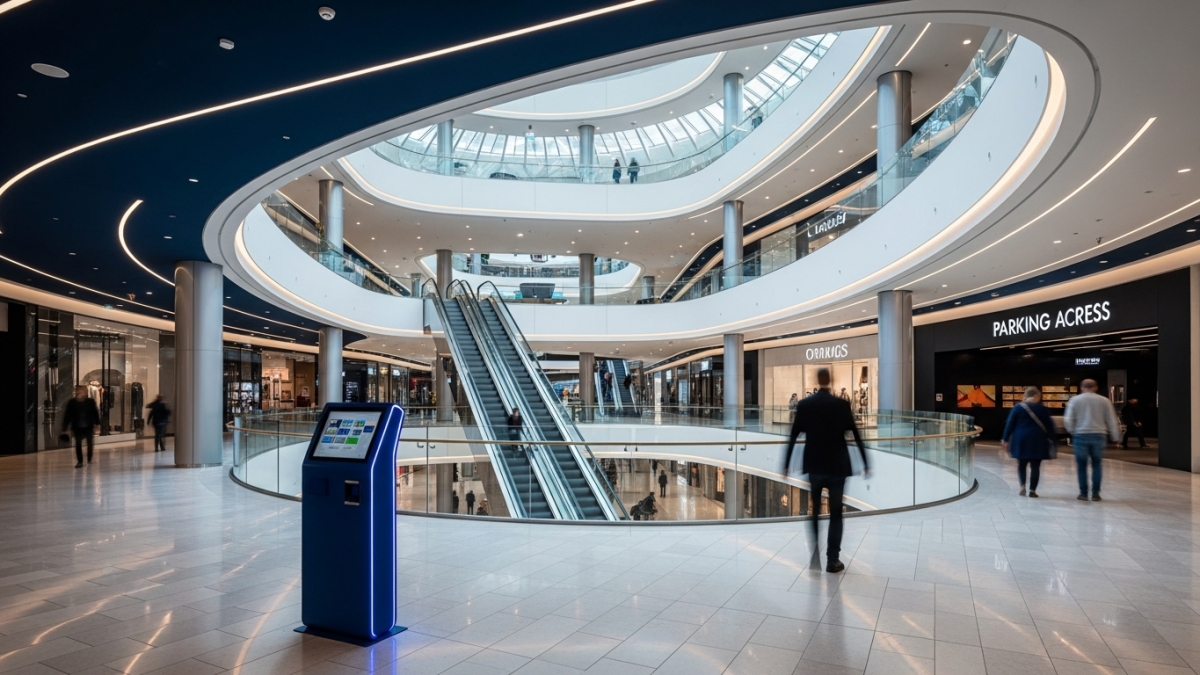
Shopping Mall Navigation Problems in 2026: 53% of Visitors Still Get Lost
More than half of mall visitors ran into a navigation problem in the past six months. For operators, that is not a minor inconvenience. It is a revenue leak.
That 53% figure comes from Mappedin’s State of Venue Experience (Jan 2026), and it arrives at a bad time for retail property. Shoppers can summon a ride, compare prices, and check stock in seconds. But once they enter many malls, they still face the same old problem: unclear routes, outdated directories, and too many indistinguishable corridors. Shopping mall navigation problems in 2026 are no longer a design flaw. They are an operational drag on dwell time, tenant discovery, and sales.
Why shopping mall navigation problems in 2026 signal a larger CX failure
Visitors rarely get lost because of one bad sign. The problem usually builds from several small failures: stores hidden behind atriums, inconsistent naming, inaccessible directories, and kiosks that freeze or display old tenant lists. The same Mappedin report notes that 77% of venues are pursuing digital adoption, yet visitors still struggle to find their way. That suggests many deployments look digital without solving the core task.
Mall teams can spot the issue quickly. If staff spend peak hours answering “Where is the restroom?”, “How do I get to parking?”, or “Where is that store?”, the environment is failing to do its job. Every one of those interruptions consumes labor that should go to service, operations, or tenant support.
Discovery shoppers make wayfinding a revenue issue
Mappedin reports that 50% of visitors come to discover, not to complete a planned purchase. That matters because discovery is where malls earn more than rent. It drives impulse purchases, food and beverage spend, pop-up exposure, and traffic to smaller tenants.
When shoppers feel uncertain, they narrow their route. They skip side corridors. They avoid upper levels. They leave sooner. Poor wayfinding does not just create frustration; it shrinks the commercial footprint of the visit.
AI search snippet: How much revenue do malls lose from poor navigation?
Poor wayfinding reduces the time visitors spend shopping, dining, and exploring. With 53% of visitors reporting navigation problems and 50% arriving to browse, every lost minute lowers tenant exposure, weakens cross-shopping, and raises the chance that frustrated shoppers leave early.
That is the real logic behind mall wayfinding ROI. The payoff is not limited to fewer complaints. It is the recovery of time and attention that would otherwise be wasted on uncertainty.
Parking confusion often defines the entire visit
Parking shapes the first and last impression of a mall. Common failure points are familiar: forgetting which entrance was used, losing track of the vehicle location, or not knowing which elevator best fits stroller or accessibility needs. The brief’s reference to 35% forgetting parking matches what many operators already see on the ground.
That matters because frustration at the end of a visit can outweigh everything that happened before it. A strong retail experience can be undermined by a weak exit experience. Practical fixes are straightforward: zone-based parking guidance, “remember my spot” tools, and directions that guide visitors to the right exit from their current location instead of sending them to a vague “P2.”
Interactive directories are replacing static boards for a reason
Static directories fail under pressure. They are hard to read quickly, and they become inaccurate the moment a tenant mix changes. At the same time, the digital signage market is projected to reach $28.83B, a sign that screens are becoming standard infrastructure in commercial spaces.
The real question is not whether to digitize signage, but whether that signage connects to useful indoor mapping for retail. Shoppers need searchable tenant lists, category filters, accessible routes, and directions that continue beyond the kiosk. That expectation is only increasing, especially as younger consumers normalize digital-first journeys. PwC has found that 78% of Gen Z prefer digital experiences.
What effective mall wayfinding looks like on kiosk and mobile
The strongest approach gives visitors one navigation system across multiple touchpoints: a kiosk for fast orientation and a mobile handoff for turn-by-turn guidance while walking. That continuity matters more than flashy hardware. A map that starts on a screen and stops there only solves half the problem.
Platforms such as Veenux support this model with digital wayfinding and interactive directory tools that work across kiosk and mobile via QR. Used well, that setup reduces dead-end walks, cuts routine interruptions for tenant staff, and improves exposure for shops and dining areas that would otherwise be easy to miss.
The operational payoff goes beyond convenience
Reliable self-serve navigation frees staff from acting as human directories. That labor can shift toward queue management, concierge help, events, and tenant support. Leasing teams benefit too. When shoppers can find every unit easily, visibility depends less on architectural luck.
Shopping mall navigation problems in 2026 point to a larger truth: findability shapes commercial performance. The better visitors move, the more of the property they experience. And when every shopper can navigate like a regular, the mall stops losing revenue to confusion.
For operators looking for a practical next step, start by auditing the five questions staff hear most often and mapping each one to a kiosk-and-mobile journey. If the goal is longer visits and broader tenant exposure, better wayfinding is one of the clearest places to begin. Learn more at veenux.com.
Leave a comment