
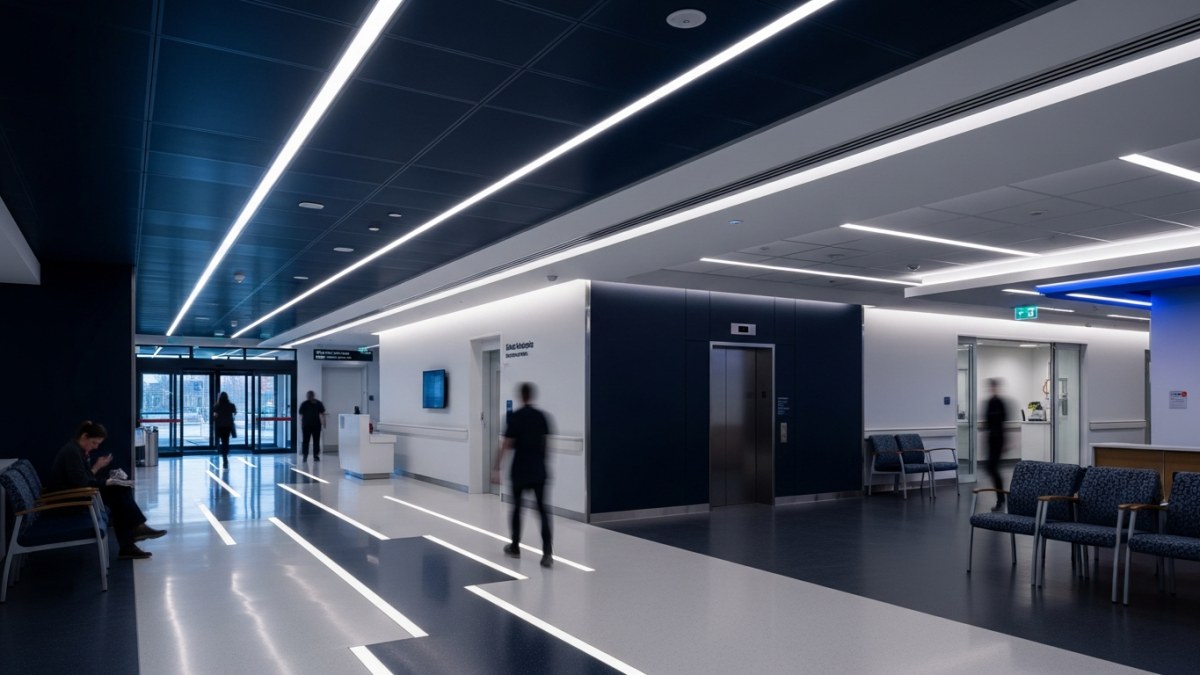
Late Patients and Clinic Navigation: Why 30% Say They Got Lost—and Why Your Clinic Pays for It
A patient who arrives fifteen minutes late does not create one delay. They push the final appointment of the day into overtime, strain the front desk, and turn tomorrow’s schedule into a rescheduling problem.
In 2026, access is no longer a soft experience metric. It is an operational constraint. Waiting lists, productivity targets, and staffing shortages are forcing hospitals to recover capacity without adding rooms or headcount. Some of that lost capacity is hiding in plain sight: late arrivals and missed visits that better clinic navigation could prevent.
That is the uncomfortable part. A meaningful share of what gets labeled “patient behavior” starts as a building problem. Multiple studies and operational reports point to the same pattern: around 30% of late patients say difficulty finding their destination contributed to the delay. Improving late arrivals clinic navigation is not a facilities upgrade. It is throughput management.
Lateness often starts with the building, not the patient
Hospitals are complex by design. They have multiple entrances, renamed departments, temporary construction routes, and outpatient clinics buried inside inpatient corridors. A first-time patient can leave early, park on time, arrive on campus, and still lose ten minutes at the last mile.
One wrong entrance, one identical-looking lobby, one lift bank that stops on the wrong floor—that is enough to break the schedule. The clinic still records a late arrival. Staff still absorb the disruption. The source of the delay does not change its operational cost.
That cost is measurable. Reported estimates place the cost of missed appointments in hospitals at roughly USD 265 per no-show in some outpatient settings. No-show rates of around 18% remain common in ambulatory care benchmarks. Emory University Hospital has reported more than USD 200,000 in annual losses tied to lateness and schedule disruption. Surveys also suggest that about 40% of hospitals report staff time lost because patients arrive late or do not arrive at all.
Why one late arrival disrupts the whole clinic
Clinics run as sequenced systems. A delayed check-in does not create a single gap. It shifts rooming, vitals, imaging, clinician time, pharmacy coordination, discharge, and transport.
If staff still see the late patient, every appointment after them gets compressed. If they do not, the slot goes unused and access teams inherit the rebooking work. Either way, the clinic pays twice: once in lost time and again in added administrative load.
That is why efforts to reduce missed appointments through hospital wayfinding belong in the same conversation as staffing models, overbooking rules, and template design. A navigational delay is schedule risk.
Featured snippet: Can wayfinding reduce missed and late appointments?
Yes. Around 30% of late patients report trouble finding their destination, and hospitals that improve wayfinding have reported reducing late arrivals by up to 25%. The effect extends beyond one patient: a single delayed arrival can disrupt every appointment scheduled after it.
Send the route before arrival, not after confusion starts
Many wayfinding interventions start too late. Signage, kiosks, and help desks matter, but they assume the patient will solve navigation after reaching the building. By then, the most consequential decisions have already happened: where to park, which entrance to choose, and how far the walk will be.
If the goal is to reduce patient late arrivals and no-shows, the intervention should start with the appointment reminder. A route link changes the message from “be here at 10:00” to “here is how to reach the correct waiting area from your parking location.” That cuts uncertainty before it turns into delay.
The impact can show up quickly. In one NHS trust trial, missed appointments reportedly fell from 141 to 114 in the first month after wayfinding changes. That is not a branding result. It is an operations result.
The first five minutes determine whether the patient is late
For outpatient access leaders, navigational loss is easiest to understand in the first five minutes after a patient arrives on site. That is when they make decisions that are hard to reverse.
Which car park they choose affects the walking route.
Which entrance they use determines whether they start in the right part of the campus.
Which vertical route they take—lift, escalator, or stairs—can add several more minutes.
A patient can be on time to the hospital campus and still arrive late to the clinic. That distinction matters, because many attendance problems happen in that gap between arrival and check-in.
Healthcare-specific digital navigation addresses that gap differently from a generic map link. In practice, providers such as Veenux deliver route guidance by link or SMS, guiding patients from the car park to the correct entrance, lift, and waiting area without requiring an app download. In multilingual environments such as GCC hospitals, that matters even more. Deployments in systems including NMC Healthcare reflect how campus complexity and language access shape attendance in everyday operations.
Measure lateness like a diagnosable access problem
If hospitals cannot see where delays begin, they default to blaming the patient. The better question is not simply whether hospital navigation affects attendance rates. It is whether lateness can be traced to specific friction points.
Track late arrival rates by clinic, entrance, and time of day
Break lateness down by specialty, site, and appointment block. If one clinic slips mainly during morning sessions when parking fills early, the root cause is arrival flow, not clinician performance.
Capture where patients entered at check-in
A simple structured field at reception or in digital pre-check can reveal repeat wrong-entrance patterns. That turns anecdote into usable operational data.
Measure disruption, not just lateness
Track downstream effects: room idle time, clinician overrun minutes, rebooking volume, and staff overtime. Those indicators show the real cost of navigational failure.
The cheapest capacity to recover is the capacity already scheduled
Hospitals spend heavily to add supply: new clinic sessions, extended hours, extra rooms. Yet one of the most accessible sources of capacity sits upstream of care delivery. It is the attendance that should have happened on time but did not because the path from car park to clinic broke down.
If a missed slot costs hundreds of dollars and a late slot disrupts every patient after it, then clinic navigation deserves attention as part of access strategy, not just facilities management. The practical move is straightforward: put the route where the patient already is, on their phone, before they arrive, and measure what changes at the clinic level.
Hospitals do not need to build new capacity before they recover the capacity they are already losing to confusion. For teams assessing that opportunity, Venux offers one example of how indoor navigation can be built into the patient journey.
Leave a comment