
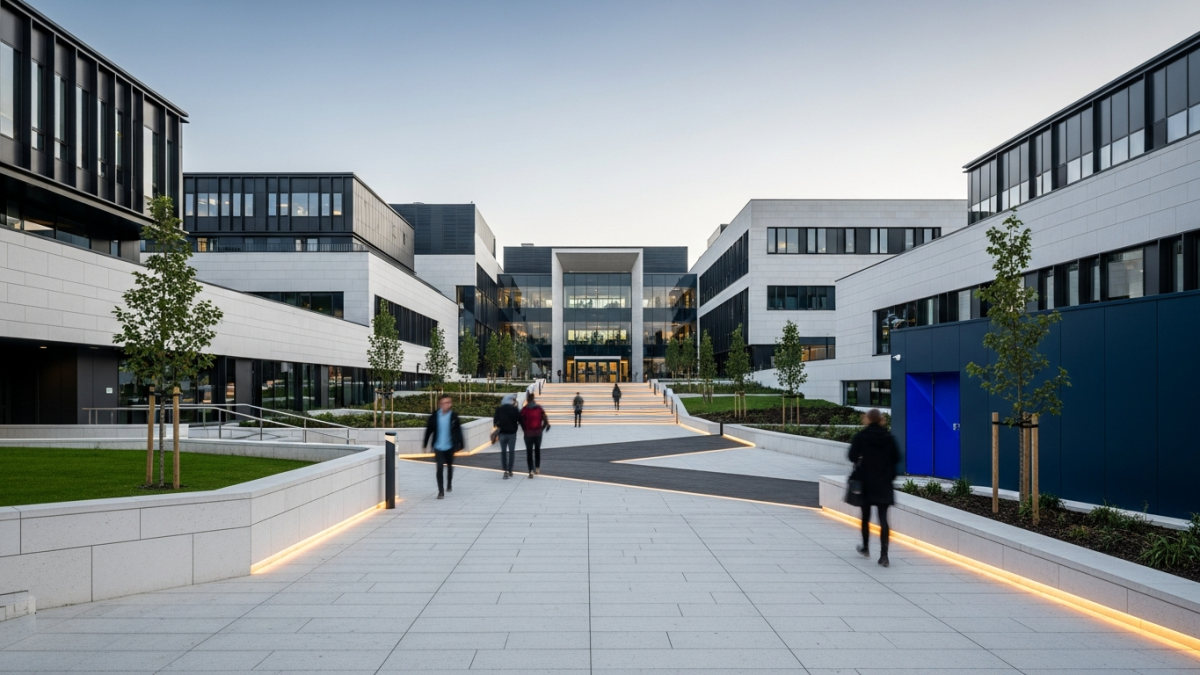
University Open Day Experience 2026: Twenty Minutes Lost Finding Building C Can Cost You an Application
An open day can shape an application decision in a single afternoon. If a family spends twenty minutes trying to find the engineering building, they may miss the one session that would have tipped the balance.
That risk is sharper in the university open day experience 2026 cycle. Admissions teams are competing with higher travel costs, tighter schedules, and rising expectations for self-serve information. In the GCC, many universities are also expanding conferences, exams, and community events as secondary revenue streams, bringing more first-time visitors onto campus each year. More visitors, less patience for friction.
1) Treat the campus visit as the final step before the application
If you’re asking does campus visit affect application decisions, the practical answer is yes. A visit compresses hundreds of micro-impressions into a few hours, and navigation shapes more of them than institutions often admit.
When wayfinding breaks down, everything else absorbs the damage. Late arrivals look like disorganization. Missed sessions feel like poor planning. Long help-desk queues suggest under-resourcing. Visitors rarely separate the navigation failure from the institution itself.
Campus research consistently ranks findability among the top user priorities, ahead of more advanced smart campus features. That offers a clear operational lesson for recruitment teams: before adding new experiences, remove the friction that stops families from reaching the experiences already in place.
Featured snippet: Why does campus navigation matter for student recruitment?
Why does campus navigation matter for student recruitment? Campus navigation affects recruitment because the visit often becomes the deciding moment for applicants and their families. Time lost finding buildings is time not spent in talks, tours, and staff conversations, and that confusion becomes part of the institution’s overall impression.
2) Map for parents and guardians, not just prospective students
Most open day planning still centers on the student. But campus wayfinding visitors parents is often where conversion weakens. Parents are more likely to drive, arrive early, manage accessibility needs, and judge how well the campus operates as a proxy for safety and competence.
That means planning for two parallel journeys.
Student journey: subject talks, labs, accommodation tours, student panels.
Parent journey: fees, careers, safety, wellbeing, transport, entry points, and exits.
Navigation should support both. That includes parking-to-registration routing, step-free paths, clear building names instead of internal abbreviations, and reliable “you are here” anchors at decision points.
3) Stop using volunteers as human signposts
When volunteers spend the day pointing at buildings, universities lose two things at once: conversion moments and staff energy. The best ambassadors should be discussing courses, outcomes, and student life, not explaining which corridor leads to Block C.
Offloading basic navigation allows teams to focus on higher-value interactions: answering academic questions, managing queues, and capturing follow-up interest. It also reduces a fragile dependence on local knowledge, which often breaks down under crowding, bad weather, or last-minute room changes.
There is a psychological cost as well. Being sent the wrong way even once can undermine confidence in the day. Visitors may recover the lost time, but not always the impression.
4) Measure sessions reached per visitor, not just footfall
Open days are expensive and difficult to repeat, yet many institutions still judge them by registrations and headcount alone. For campus visit conversion applications, a more useful metric is simple: which sessions did visitors actually reach?
That measure exposes where friction sits. It may reveal timing gaps between talks, confusing building clusters, or signage deserts between the main gate and academic areas. It also helps admissions teams identify which sessions correlate with applications and which look strong on paper but remain hard to access in practice.
Footfall tells you who came. Session reach tells you what they experienced.
5) Plan for international families and multilingual support
International families and first-time visitors are often least able to “just ask someone.” Language barriers, unfamiliar campus norms, and time pressure can turn minor confusion into missed sessions.
PwC has reported that 78% of Gen Z prefer digital wayfinding. The expectation is now clear: navigation should work more like a consumer map—immediate, searchable, personal, and available in more than one language.
Practical steps are straightforward. Publish directions in multiple languages. Use landmark-based instructions, not only building codes. Make key destinations searchable by the names visitors use, such as “Engineering,” “Admissions,” or “Scholarships,” rather than internal room labels.
6) Build one navigation system for open days, exams, and events
Wayfinding should not be rebuilt for every event. The same campus that hosts open days is also guiding visitors through graduations, entrance exams, and external conferences. In the GCC especially, event hosting is becoming a larger part of university operations.
A consistent approach to navigation for parents and visitors on campus reduces confusion year-round and creates cleaner operational data. It also shifts navigation from a one-off event task to a campus capability.
A practical model: browser-based, event-specific campus maps
One pattern emerging at Saudi universities is the use of browser-based visitor maps that can be updated by event. Veenux, for example, supports QR-shared maps, event-specific layouts, and multilingual routing without requiring an app download. The broader point is not the tool itself. It is the operating model: one map layer that can change as the campus and the event change.
Navigation is part of the recruitment pitch
An open day is a recruitment environment disguised as a campus tour. When visitors arrive late, miss talks, or feel embarrassed asking for directions, that friction becomes part of the brand they take home.
The answer is not more signs alone. It is a navigation strategy that institutions can measure, adapt, and reuse across events. Universities that reduce wayfinding friction give families more time for the conversations that drive decisions.
If the campus visit is the last step before the application, navigation deserves the same attention as the pitch itself. Learn more at veenux.com.
Leave a comment