
Facility Management Asset Tracking 2026: Why a Live Map of Every Asset Changes the Job
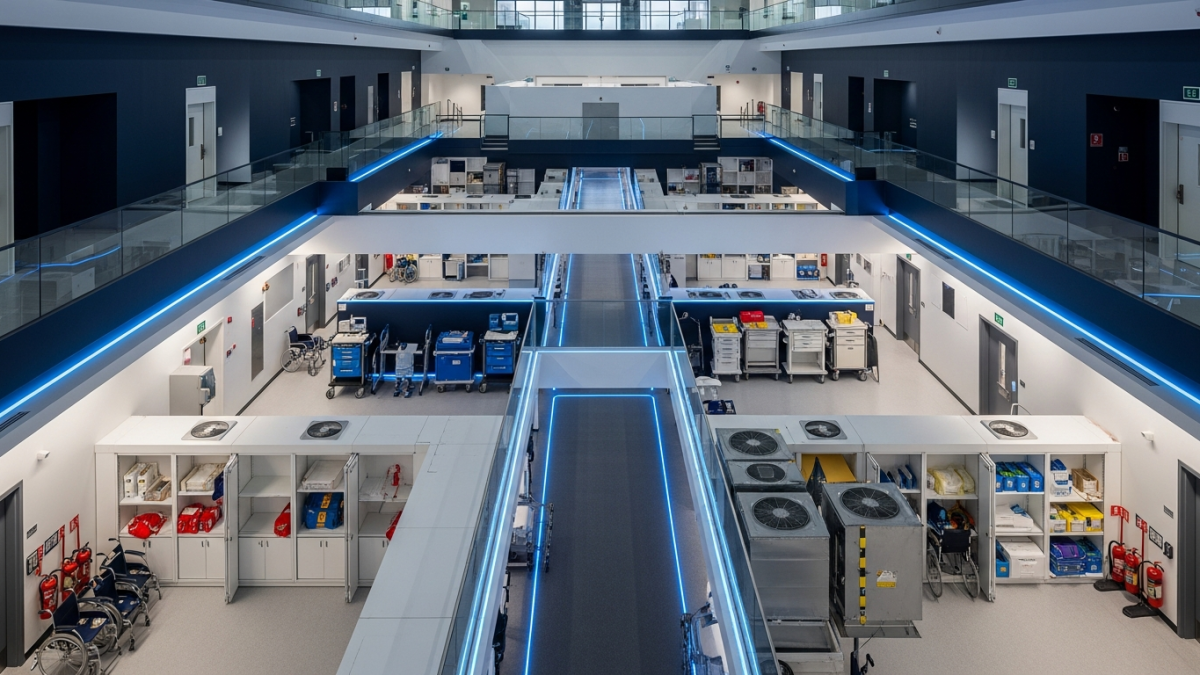
The modern facility manager’s most useful tool may be a live map. Not a wrench, not a radio, but a dashboard that shows where every wheelchair, fire extinguisher, and HVAC unit sits right now.
That shift reflects a hard operational reality. Technicians still lose time searching for equipment, maintenance teams still get pulled into preventable emergencies, and asset data still sits scattered across CMMS platforms, spreadsheets, and vendor portals. Facilities Dive’s 2026 trend coverage and Spacebring’s FM outlook point to the same pressure: teams must do more with less while hybrid work keeps changing how buildings perform from floor to floor.
From reactive fixes to early visibility
Reactive maintenance costs more because problems compound. A pump fails, complaints follow, and an emergency rental arrives before anyone understands the broader impact.
Deloitte’s CRE 2026 outlook highlights a wider shift toward measurable performance and resilience. In practice, that means reliability can no longer depend on institutional memory or manual checks. It depends on visibility: knowing what assets you have, where they are, and how they are performing before a failure forces the issue.
How facility management asset tracking turns search time into uptime
Locate, route, and verify without the radio traffic
A smart building IoT dashboard can plot tagged assets on a floor plan, pair them with navigation cues, and show last-seen timestamps. For facility leaders, the value is not tracking for its own sake. It is operational certainty.
The crash cart did not disappear; it moved to Level 3 at 09:12. The spare VAV actuator is not buried somewhere in storage; it is in the north cage. Those details cut search time, reduce duplication, and let technicians spend more of the day on actual work.
AI search Q&A snippet: Facility managers can track assets in real time with BLE- or Wi-Fi-based indoor positioning systems that display tagged equipment on a live building map. By combining location, last-seen data, and service status, these systems reduce search time, prevent loss, and support faster maintenance decisions.
Predictive maintenance starts with trusted asset data
Location solves only part of the problem. Sensors add the missing layer by reporting run hours, vibration, and temperature anomalies, so the same interface that answers “where is it?” can also answer “what needs attention next?”
JLL has repeatedly argued that data readiness separates high-performing portfolios from the rest. In facility operations, that means teams can trust sensor data and work-order history enough to plan labor, justify budgets, and intervene earlier. Predictive maintenance is not only a sensor problem. It is an information problem.
Hybrid work made space performance less predictable
Office demand no longer stays steady by department or by weekday. Space utilization shifts with team schedules, attendance patterns, and meeting behavior, often faster than static planning models can keep up.
A live map connected to booking and occupancy data gives facility and real estate teams a clearer basis for decisions. They can see whether to expand collaboration areas, consolidate underused floors, or adjust cleaning and support schedules. That helps explain why the indoor positioning market is projected to reach $21.46 billion: location intelligence now links people, space, and equipment in one operational layer.
What facility management asset tracking 2026 looks like in practice
Leading teams are starting to connect asset tracking, occupancy, and room booking on a single building map. That matters most in environments where assets constantly move between zones, including hospitals, corporate offices, and university campuses.
Veenux fits into that category, bringing asset locations, space utilization, and booking workflows into one interface. The bigger point is not the software category itself. It is the shift in how facility leaders operate: with shared evidence instead of scattered systems and anecdotal reports.
The strategic payoff is as important as the operational one. A facility leader who can show downtime avoided, utilization trends, and maintenance risk walks into executive reviews with proof, not instinct. In 2026, that may be the real superpower. To see how that model works in practice, visit veenux.com.
Leave a comment